When a match changes: version control for football posters
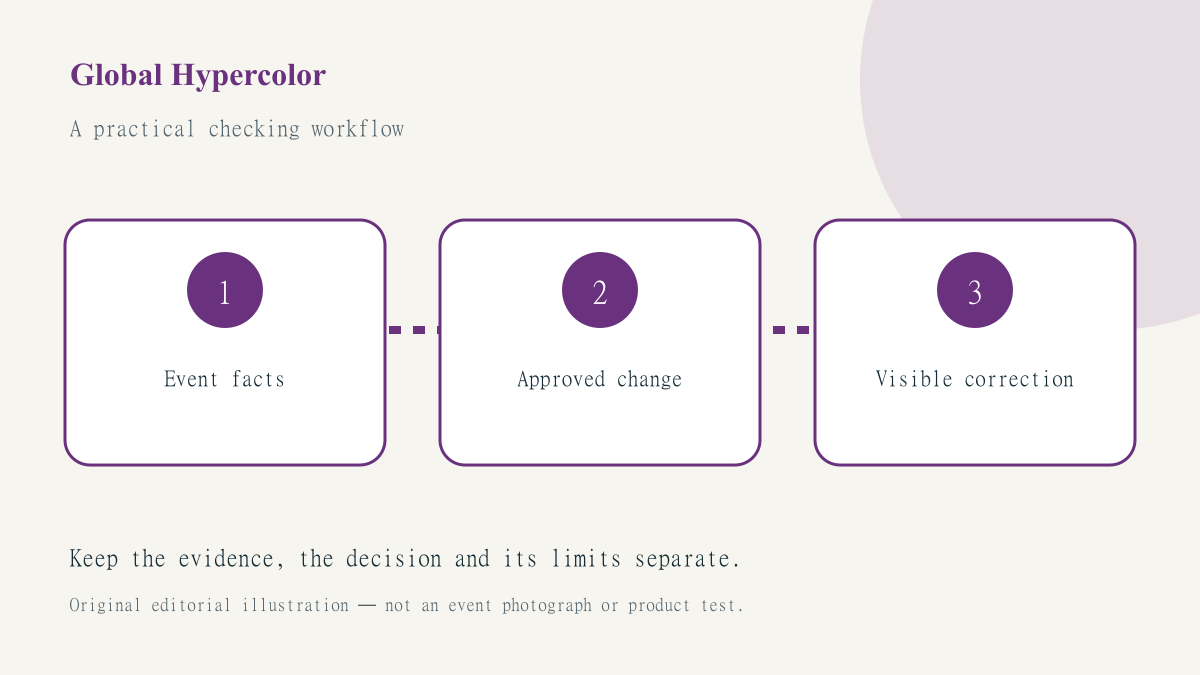
A football poster is a small publishing system. It contains a date, a place, a promise about an event and often an instruction to book or travel. When a match changes, replacing the central photograph is the least important part of the job. The designer needs to discover which claims are now unsafe, who can approve a correction and how people will recognise the new version after the image leaves its original page.
This guide uses the distinction between postponed and abandoned football matches as a starting point for a visual-design workflow. It does not announce a current postponement. The worked situation below is hypothetical: a community organiser has circulated a Saturday match-night poster, then receives an unconfirmed message saying the fixture has changed.
Separate the event facts from the poster’s promises
Make two lists before opening the design file. The event list contains the competition, teams, scheduled start and source of the latest status. The organiser list contains venue access, booking instructions, arrival time, screening arrangements and any cancellation message. A change in the first list may affect the second, but it does not automatically settle every item. A rearranged sporting date is not a confirmed new venue booking.
Assign one owner to each uncertain field. The person checking the competition’s announcement should not silently approve a refund statement. The venue contact should not be asked to infer a sporting decision from an old calendar. Keep the current fixtures and results listing beside the official announcement as a navigation aid, and record which source supports each field rather than treating the whole poster as one verified object.
Build a correction layer that survives cropping
Put the correction where a cropped social image will still communicate its meaning. A tiny note below the sponsor strip can disappear when another person saves a square version. The replacement should clearly identify what changed, the relevant local date and where the reader can find the current arrangement. Do not rely on colour alone: a red border means little to someone who never saw the previous green version.
A practical hierarchy is event identity first, changed status second, next action third. If the replacement date is not confirmed, say that it is not confirmed instead of inserting a likely date to preserve the layout. Empty space is preferable to false precision. Review the graphic at phone size and as a plain-text transcription; both should communicate the same essential instruction.
Use a small version register
Keep the editable artwork, approved export and distribution record separate. A filename such as match-poster-v3 is useful internally, but it will not tell a reader whether the graphic applies to their booking. The public artwork needs a meaningful update note, while the internal register should retain the approver, checked time, source URL and exact export filename. Store the previous export as superseded, not as another equally current option.
For the hypothetical Saturday poster, the register might say: original export withdrawn from the website; venue decision pending; replacement notice approved for the booking page; printable entrance notice awaiting manager review. Those are different states. A designer should not mark the whole task complete merely because the latest PNG has been uploaded to a shared folder.
Check what else the image implies
A television logo, the word live or a photograph of a particular venue can imply more than the written date. Revisit those elements when the arrangement changes. Use the country-specific broadcaster checklist to distinguish a viewing check from a general assumption about rights. Remove a programme claim that is no longer supported; do not leave it embedded in an image just because the text below has been corrected.
Also check accessibility. Retained image alt text must describe the corrected notice, not the old kick-off. A linked image should lead to the updated information page rather than an obsolete booking form. If the venue has a screen, check the actual displayed file and its rotation, because a correct website export does not prove that an older screen card has stopped playing.
Close the loop with the distributor
Send the approved replacement to the person responsible for each controlled placement. Ask for confirmation of the specific change: old file removed, replacement visible and destination link checked. This is a proposed operational handover, not permission to send unsolicited messages. Where a poster has escaped into private conversations, keep one stable public update page that people can share instead of issuing a series of unexplained image versions.
Use SportsFixtures for wider schedule exploration, but make the organiser’s current arrangement explicit on its own page. Our editorial checking method applies the same principle to corrections: identify the claim, retain the evidence and show the actual change. A successful correction is measured by fewer contradictory instructions reaching readers, not by how quickly a new colour scheme was exported.