Before reusing a news photograph in a design
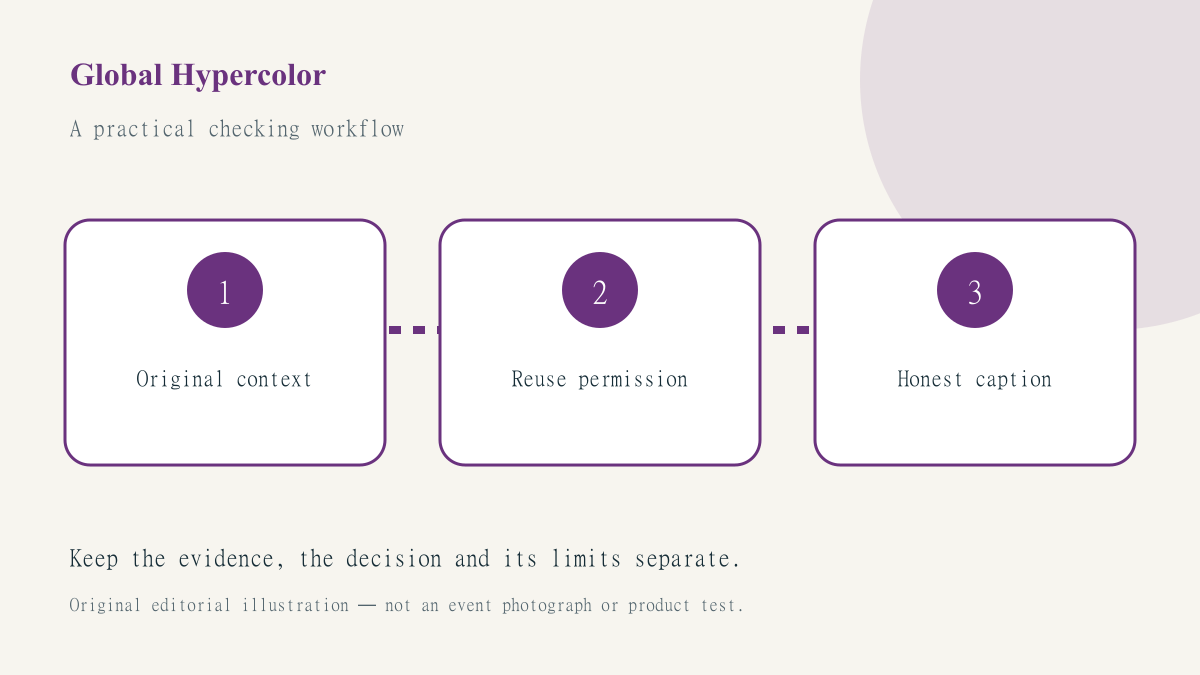
A photograph can be genuine and still be the wrong picture for a new design. A familiar street, an apparently recent caption or a dramatic crop may encourage a designer to treat an image as current evidence. Before placing it in an event poster, explainer or campaign layout, separate three questions: what the image actually shows, what the proposed design claims, and whether the image may be reused.
The guide to checking an older news photograph offers a useful starting point for the evidence question. This article focuses on the creative production handover: what a designer should retain, what should be checked before cropping and how to avoid turning an uncertain picture into an apparently authoritative visual statement.
Preserve the uncropped reference
Save the source-page URL, visible caption, credit and the time you consulted it. Keep an uncropped reference beside the working crop. A screenshot taken from a messaging application may have removed exactly the information needed to understand the original context. It can be a lead for research, but it is a poor substitute for the page where the photograph was originally explained.
Write down the proposed use in a sentence. For a hypothetical local event poster, does the design imply that this photograph shows the venue today, the same event last year or simply the kind of activity readers can expect? Those are different statements. If the designer cannot explain which one is intended, the eventual viewer is unlikely to infer the distinction reliably.
Investigate earlier appearances without overclaiming
Reverse-image tools can reveal matching or similar pictures, but the date attached to a result is not automatically the moment the camera shutter was pressed. Open the matching pages and read their captions. Compare the whole scene, including details outside the planned crop. Treat a search result as a route to evidence rather than a verdict that an image is either current or false.
Maintain a short evidence log with separate fields for earliest located appearance, identified event, stated location and unresolved details. If an old page names a different event, explain that specific finding. If it lacks a date or clear attribution, retain an unverified status. A designer should not replace uncertainty with an impressive-looking source badge simply to complete the artwork on schedule.
Trace the reporting, not just the thumbnail
A picture attached to an aggregator card may belong to a linked publisher, and that publisher may in turn credit an agency or photographer. The distinction between an aggregator and an original publisher helps identify which page to inspect. Several repeated thumbnails do not establish several independent records of the scene.
When accounts disagree, use the coverage comparison method to map who is relying on whom. A useful production note might say that two articles repeat one agency caption while a third includes a separate interview. That note gives the reviewer a real explanation, unlike a simple statement that the picture appears on three reputable websites.
Treat permission as its own approval
Finding a picture through search does not grant reuse rights. Identify the actual licence or obtain permission through the appropriate rights holder before publication. Keep the permission record and any required credit with the asset, not in a private conversation that the next designer cannot find. Where the permitted use or attribution requirement is unclear, use an original illustration or a different properly licensed image instead.
Do not assume that making a crop, adding a colour overlay or placing text on top resolves the rights question. Those changes can also remove important context. This guide is a production checklist, not a licence interpretation or legal clearance. A high-risk commercial use may need a suitably qualified rights review rather than a design team’s best guess.
Review the final composition for implied claims
Read the headline next to the image, not separately from it. A carefully qualified paragraph can be undermined by a photograph that appears to document the very event the text says is unconfirmed. Check alt text and captions too: they should describe the supported context rather than repeat an attractive but uncertain headline. If an image is illustrative, say so clearly.
Use NewsBeagle for attributed news discovery, then keep your design’s evidence and permission records tied to the actual asset. Our corrections contact is available when a published guide needs attention. Good visual research ends with a defensible choice about what to show, not merely a folder containing a large enough image.